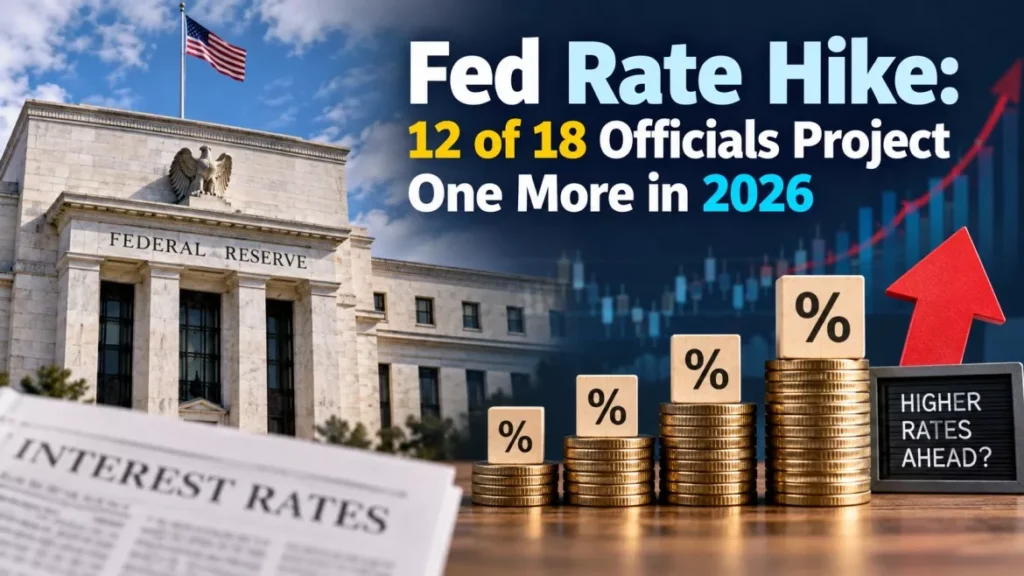

The Federal Reserve raised its benchmark interest rate by a quarter point on 16 September 2026, its first increase since 2023. The new target range for the United States federal funds rate is 3.75% to 4%, effective 17 September. The Federal Open Market Committee approved the Fed rate hike by 12 votes to none.
What the Federal Reserve Decided on 16 September 2026
The Federal Open Market Committee, the panel inside the Federal Reserve that sets United States interest rates, lifted its target range by 0.25 percentage points from 3.5%-3.75% to 3.75%-4%. The decision was announced at 2:00 p.m. Eastern Daylight Time and the new rates apply from 17 September 2026.
The federal funds rate is the rate at which American banks lend reserves to one another overnight. It is not a rate any household is charged directly, but it anchors the pricing of most other short-term borrowing in the United States.
The same-day implementation note set the administered rates the Federal Reserve uses to hold the funds rate inside its range.
| Rate | Level from 17 September 2026 |
|---|---|
| Federal funds target range | 3.75%-4%, up from 3.5%-3.75% |
| Interest on reserve balances | 3.90% |
| Primary credit (discount) rate | 4.0%, raised by 0.25 points |
| Overnight reverse repo offering rate | 3.75% |
As of 17 September 2026, the United States federal funds target range stands at 3.75% to 4%, according to the FOMC’s implementation note published alongside the decision. This applies to the United States only; other central banks set their own rates on their own timetables.
Why the Federal Reserve Raised Rates Now
The Committee said inflation is running too far above its goal. Its statement described inflation as elevated and said the move “will support a timelier return to the Committee’s 2 percent goal”, while noting that economic activity is expanding at a solid pace and that the unemployment rate has changed little.
Fed Chair Kevin Warsh, speaking after the decision, said inflation “is too high and has been for too long” and described the labour side of the Federal Reserve’s mandate as being in good shape. He said conditions had changed since the previous meeting, pointing to recent data showing a strong labour market.
The inflation readings behind the decision:
- Consumer Price Index, August 2026: up 3.4% over 12 months and 0.4% on the month, published by the Bureau of Labor Statistics on 11 September 2026.
- Core CPI, August 2026: up 2.4% over 12 months, excluding food and energy.
- PCE inflation, 2026 median projection: 3.7%, well above the Federal Reserve’s 2% target.
The August figures were the last major inflation print before the meeting, and they came in hot enough that traders had already moved heavily towards expecting a rise. Our earlier report on the August CPI report and the shift in rate expectations covers how sharply that repricing happened.
What the Dot Plot Shows About the Next Move
The Federal Reserve’s own projections point to exactly one more quarter-point rise in 2026, but the Committee is not of one mind about it.
Four times a year the Federal Reserve publishes a Summary of Economic Projections, known informally as the dot plot because each policymaker marks where they think rates should end up. An important distinction gets lost in most coverage: 18 participants submit projections, but only 12 of them vote on the decision itself. A projection is where a policymaker thinks rates ought to go, not a promise of how they will vote.
For the end of 2026, the Committee’s Summary of Economic Projections shows the following split:
- 4.125% midpoint, one more quarter-point rise: 12 participants.
- 4.375% midpoint, two more quarter-point rises: 4 participants.
- 3.875% midpoint, no further change this year: 2 participants.
The median lands at 4.1%, which is what produces the widely reported line that one more increase is coming. The projections also show the median holding at 4.1% through the end of 2027 before easing, which is a longer plateau than a single headline number conveys.
| Median projection | 2026 | 2027 | 2028 | Longer run |
|---|---|---|---|---|
| Federal funds rate | 4.1% | 4.1% | 3.9% | 3.2% |
| PCE inflation | 3.7% | 2.3% | 2.1% | 2.0% |
| Core PCE inflation | 3.4% | 2.5% | 2.2% | — |
| Unemployment rate | 4.1% | 4.1% | 4.1% | 4.2% |
| Change in real GDP | 2.3% | 2.4% | 2.2% | 2.0% |
The statement itself carried no explicit forward guidance about the next meeting. The projections are a snapshot of individual views on 16 September 2026, not a plan the Committee has committed to.
Which United States Household Rates Move Next
A quarter-point change in the federal funds rate feeds through to American consumer borrowing at different speeds, and not all of it moves at all. The figures below are national averages published by third parties; an individual’s rate depends on their lender, credit file, loan type and state, and can sit well above or below the average.
Credit cards. Variable card rates in the United States are usually tied to the prime rate, which tracks the federal funds rate closely, so they tend to reprice within a billing cycle or two. CNBC reported that a cardholder carrying the average second-quarter 2026 balance of $6,610 at a 22% annual percentage rate would see a minimum monthly payment rise of about $1.38. Matt Schulz, quoted by the Associated Press, said a single quarter-point rise “isn’t really going to have a huge impact” unless such increases stack up over time.
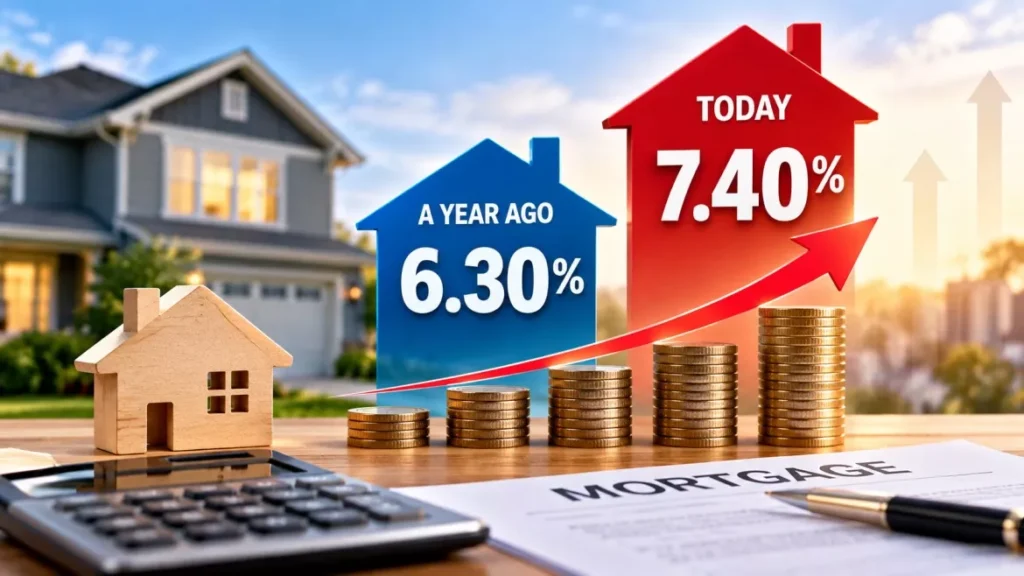
Mortgages. United States fixed mortgage rates track long-term Treasury yields rather than the federal funds rate, so they do not move mechanically with a Fed decision. The 30-year fixed rate averaged 6.76% in Freddie Mac’s weekly survey for the week to 10 September 2026. Our separate report on how daily and weekly mortgage rate readings diverged this month sets out why the two numbers differ. Movements in the 10-year Treasury yield matter more here than the funds rate itself.
Car loans. The Associated Press reported average United States rates last month of about 7% on new-car loans and 10.6% on used-car loans, with an average monthly payment of $765. Fixed-rate loans already signed do not change; the rate applies to new borrowing.
Savings and deposits. Deposit rates typically follow the funds rate upward, but banks are under no obligation to pass an increase on and often do so slowly and unevenly. The Associated Press reported that the average one-year certificate of deposit paid 1.71% last month, far below the top rates offered by some online banks.
Anyone in the United States who wants to know what changes on their own account should check the notice their card issuer, lender or bank sends, since terms vary by institution and by product.
What Is Still Undecided
Two scheduled meetings remain in 2026, and the Committee has committed to nothing at either.
- 27-28 October 2026: a two-day meeting with no Summary of Economic Projections attached.
- 8-9 December 2026: a two-day meeting that does carry a new Summary of Economic Projections, the next formal update to the dot plot.
Both dates come from the Federal Reserve’s published 2026 calendar. What the Committee does at either will depend on inflation and labour market data that has not been released yet. The Federal Reserve has not signalled a specific move at a specific meeting, and the 12-4-2 split in the projections shows genuine disagreement about how much further to go.
Frequently Asked Questions
How Much Did the Fed Raise Rates in September 2026?
By 0.25 percentage points. The United States federal funds target range moved from 3.5%-3.75% to 3.75%-4% on a 12-0 vote of the Federal Open Market Committee on 16 September 2026.
When Does the Fed Rate Hike Take Effect?
17 September 2026. The Federal Reserve announced the decision on 16 September and its implementation note set the new administered rates to apply from the following day.
Will the Federal Reserve Raise Rates Again in 2026?
The Committee has not committed to anything. Its September projections show 12 of 18 participants placing the end-2026 rate one quarter-point higher, 4 placing it two quarter-points higher and 2 seeing no further change.
Does a Fed Rate Hike Push Up Mortgage Rates?
Not directly in the United States. Fixed mortgage rates follow long-term Treasury yields and can move in either direction after a Fed decision. Variable-rate borrowing such as most credit card debt tracks the funds rate far more closely.
When Is the Next Federal Reserve Meeting?
27-28 October 2026, followed by 8-9 December 2026. Only the December meeting comes with an updated Summary of Economic Projections, according to the Federal Reserve’s published calendar.
Why Was the Vote 12-0 When 18 Officials Submitted Projections?
The Federal Open Market Committee has 12 voting members at any time, but 18 policymakers take part in the discussion and submit projections. Voting rights rotate among the Reserve Bank presidents.