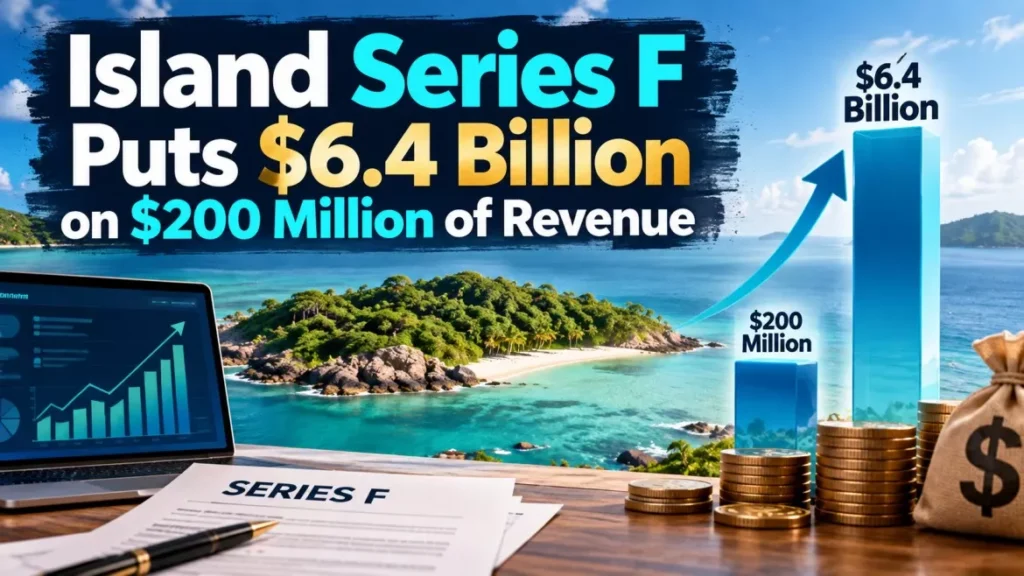

The Island Series F round has closed at $400 million, valuing the enterprise browser company at $6.4 billion. Island, based in Dallas, announced it on 24 September 2026 with Evolution Equity Partners leading. Recurring revenue is running at about $200 million a year, having doubled every financial year since February 2022.
What Island Sold Investors On
Island makes an enterprise browser: a Chromium-based browser a company installs instead of a consumer one, with controls over copying, downloading, printing and screen capture built into the browser itself rather than bolted on through a network appliance.
The figures the company and its executives put behind the round, as of September 2026:
- Recurring revenue: about $200 million a year, growing at roughly 100% annually, according to co-founder and chief technology officer Dan Amiga.
- Growth record: annual recurring revenue has doubled every financial year since the February 2022 launch, per Island’s own announcement.
- Customers: eight of the world’s ten largest banks, up from seven of the ten largest financial institutions and 450 customers at the previous round in March 2025.
- Headcount: about 1,000 staff, up from more than 500 a year earlier.
Annual recurring revenue, usually shortened to ARR, is the value of subscription contracts restated as a full-year figure. It is a company-reported measure, not an audited one, and Island is private and does not publish accounts.
How the Valuation Reached $6.4 Billion
The $6.4 billion figure is the post-money valuation attached to this round, meaning it includes the new $400 million. Set against about $200 million of recurring revenue, that is roughly 32 times revenue.
| Date | Round | Raised | Valuation |
|---|---|---|---|
| 2024 | Earlier round | Not disclosed here | About $3 billion |
| March 2025 | Series E | $250 million | About $4.85 billion |
| 24 September 2026 | Series F | $400 million | $6.4 billion |
Island’s announcement says the valuation has more than doubled since 2024. Reports of the round put total capital raised across all rounds at about $1 billion.
Who Put the Money In
Evolution Equity Partners led. Existing backers Prysm Capital, Sequoia Capital, Coatue Management, Cyberstarts, Insight Partners and J.P. Morgan Growth Equity Partners took part, alongside new investors Alta Park Capital, Georgian, G Squared and Squarepoint. Dmitri Alperovitch, a co-founder and former chief technology officer of CrowdStrike, invested personally.
“Island has already shown it can create a category, displace legacy technologies, and accelerate customers’ transformation,” Richard Seewald, founder and managing partner of Evolution Equity Partners, said in the company’s announcement.
What a Buyer Actually Pays
This is where the funding announcement stops short. Island does not publish a price list, and the round disclosed nothing about what customers pay. Industry write-ups describe Island as selling through six-figure enterprise contracts negotiated per deployment.
The published alternative is easier to cost. Google’s Chrome Enterprise Premium carries a list price of $6 per user per month and includes real-time data loss prevention controls on copy, paste, upload, download and print actions, plus data masking and watermarking. Palo Alto Networks sells the Prisma Access Browser, built on the Talon technology it acquired in 2023, on quoted enterprise terms rather than a published rate.
| Product | Published price |
|---|---|
| Island enterprise browser | Not published; quoted per deployment |
| Google Chrome Enterprise Premium | $6 per user per month |
| Palo Alto Networks Prisma Access Browser | Not published; quoted per deployment |
Published list prices and negotiated enterprise prices are not comparable, and what any organisation pays depends on seat count, term length, bundling and region. The point is narrower: on 25 September 2026 a buyer could look up one of these three numbers and not the other two.
What the Money Is For
Island’s stated direction is from browser controls to what it calls an agentic control plane — a single policy and audit layer covering browsers, endpoints, applications, networks and data, including when the action is taken by an AI agent rather than a person.
“Just like humans, agents need the right context, access, guardrails, and accountability to succeed,” chief executive and co-founder Mike Fey said. Amiga framed the technical claim this way: “Agents do not operate in a single layer of the technology stack, so they cannot be governed from one.”
That positioning places Island alongside a broader push to put controls around software agents before they run inside companies, a problem that surfaced in draft agent security guidelines published earlier in September 2026. It is a claim about product direction, not a shipped feature list with dates, and the announcement did not name availability dates for the wider control plane.
What the Round Does Not Tell You
- Profitability: not disclosed. Doubling ARR says nothing about whether the company makes money.
- Net retention or churn: not disclosed, so the quality of the revenue growth cannot be checked.
- Pricing: not disclosed, which is the figure a prospective buyer needs and the one no ranking coverage of this round supplies.
- Customer count: the current total was not given; the 450 figure dates from March 2025.
- Hiring detail: reports tied to the round describe about 500 additional roles in Dallas by mid-2027. Island’s own announcement did not set that out.
As of 25 September 2026, the round has been announced and the valuation stated by the company; none of the financial figures above have been independently audited or filed publicly. Enterprise software buyers have seen the same pattern this month in agent products shipped without prices and in usage-based billing defaults arriving on existing subscriptions.
Island Series F: Frequently Asked Questions
How Much Did Island Raise in Its Series F?
$400 million, announced on 24 September 2026 and led by Evolution Equity Partners. The round values Island at $6.4 billion after the investment.
What Does Island Actually Sell?
An enterprise browser built on Chromium that a company deploys to staff in place of a consumer browser, with data controls such as copy, download, print and screen-capture restrictions enforced inside the browser.
How Much Revenue Does Island Have?
About $200 million in annual recurring revenue as of September 2026, growing at roughly 100% a year, according to co-founder Dan Amiga. Island is privately held and the figure is company-reported rather than audited.
What Does Island Cost?
Island does not publish pricing, and the Series F announcement did not disclose it. By comparison, Google’s Chrome Enterprise Premium lists at $6 per user per month.
Who Are Island’s Main Competitors?
The products most often compared with Island in 2026 are Palo Alto Networks’ Prisma Access Browser, built on the Talon technology Palo Alto acquired in 2023, and Google’s Chrome Enterprise Premium.