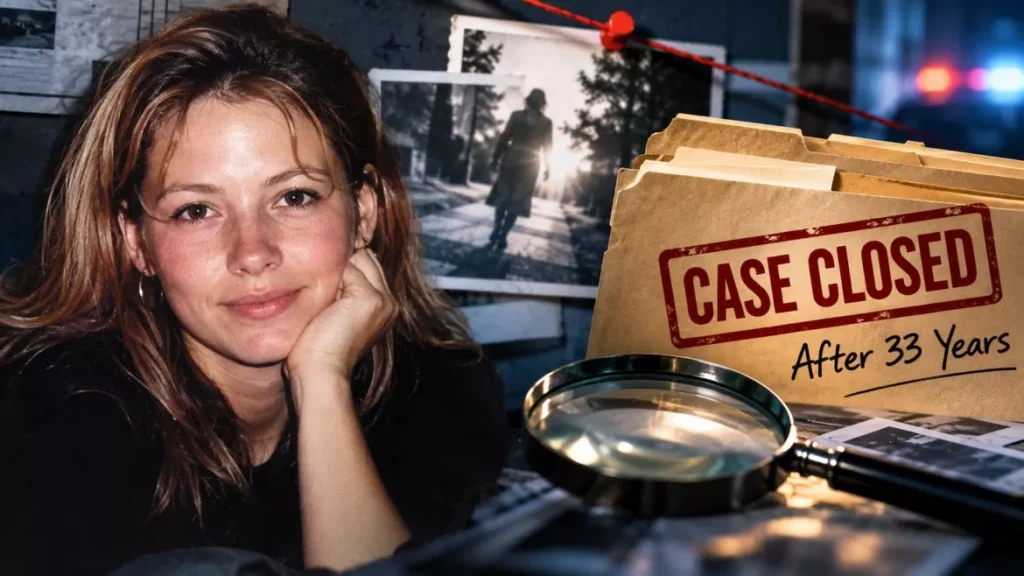

Tanja Groen has never been found. Dutch police and the Public Prosecution Service closed the investigation into her disappearance on 11 May 2026, 33 years after she vanished cycling home from a Maastricht student party on the night of 31 August 1993. Every plausible scenario had been exhausted, prosecutors said.
Who Was Tanja Groen?
Tanja Afra Maria Groen was an 18-year-old Dutch student who had just begun a health sciences degree in Maastricht.
She was born on 23 June 1975 and grew up in Schagen, in the province of North Holland, at the opposite end of the country from Maastricht. She had moved south for university and was renting a room in Gronsveld, a village about ten kilometres from the city centre. She had been a student for only a matter of days when she disappeared, and her parents were expecting her home in Schagen the following weekend.
What Happened on the Night of 31 August 1993?
Groen left a student society party in central Maastricht on her bicycle and never reached her room.
The party was an introduction event at the Circumflex student society. She set off some time in the night of Tuesday 31 August into Wednesday 1 September 1993 for the ride to Gronsveld. Nobody has reported seeing her after she left.
No trace of her has ever been recovered, and that includes her bicycle, which has never been found either. Police treated the case as a probable crime from the earliest stage, but no suspect was ever charged.
Why Did Police Close the Case in May 2026?
Investigators said they had run out of lines of inquiry, not that they had ruled out a crime.
In its statement of 11 May 2026, the police said all serious information, tips, insights and leads gathered across 33 years had been examined, and that thousands of hours of work by police, prosecutors and other organisations had produced no answer to what happened to Groen or where she is. DNA comparisons returned no match in Dutch national databases, in missing-persons databases or at Interpol.
The case prosecutor, Dave Mattheijs, said that every somewhat plausible scenario had been pursued, and added that the fact Tanja was never found is of course unacceptable. Hans Spronck of the police cold case team said the team deeply regretted not having been able to solve the case. Groen’s parents, Corrie and Adrie Groen, were informed about a month before the public announcement.
What Did the Belgian Prisoner’s Claim Amount To?
A detainee came forward weeks before the closure with a name and a burial site, and the information did not hold up.
On 20 April 2026, Dutch media reported that a 55-year-old Belgian prisoner serving a life sentence for a 2002 murder claimed to know who had abducted and killed Groen in 1993 and where she was buried. Reports at the time, citing unnamed sources, said the account was specific enough that authorities were weighing a fresh excavation. The Public Prosecution Service declined to comment publicly while the matter was open.
Three weeks later the police closed the case. Their statement said information supplied by a detainee in the final phase of the investigation had proved partly unreliable and could partly not be answered. No excavation based on that account has been reported, and nobody has been charged.
That sequence is the reason the closure landed when it did. The last concrete lead in a 33-year investigation was tested and failed, and the file was shut three weeks later.
Was Marc Dutroux Ever Linked to Tanja Groen?
He was investigated more than once, and no forensic link was ever established.
Marc Dutroux, the Belgian serial offender convicted in 2004 of abducting and abusing young girls, was active in the border region in the 1990s, which made him an obvious line of inquiry. Items belonging to Groen were compared against material seized in the Dutroux investigation as early as 1997, without result.
The question was reopened in October 2022, when Belgian and Dutch authorities agreed to compare unidentified female DNA profiles recovered from Dutroux’s houses and vans against Groen’s DNA profile. The Netherlands Forensic Institute carried out that comparison, confirmed in April 2024, and found no match. The 2026 police statement recorded no DNA correspondence from any of this work.
Readers interested in how modern forensic genealogy has resolved other long-running cases may want to compare this outcome with the Idaho case of the Unknown Wanderer, identified decades later, where a usable DNA profile existed. In the Groen case there is no body and no recovered trace, so there is nothing to test.
What Happened to the One Million Euro Reward?
The reward was raised, never claimed, and redirected to other unsolved cases.
The Dutch crime journalist Peter R. de Vries set up the De Gouden Tip foundation in June 2021 and made Groen’s disappearance its first target, crowdfunding a reward for information that would resolve the case. After De Vries was attacked in Amsterdam in July 2021 and died of his injuries, donations surged and the one million euro target was met within a week. It remains the largest reward ever offered for information in a Dutch criminal case.
The offer drew roughly 1,000 new tips. On 22 December 2022, authorities announced that none had produced a breakthrough, and the foundation released the money for use on other cold cases and for victim support. The reward is therefore no longer available for information about Groen.
Timeline of the Investigation
| Date | Development |
|---|---|
| 31 August 1993 | Groen leaves a Circumflex society party in Maastricht by bicycle and does not reach Gronsveld |
| 1997 | Her belongings are compared against material seized in the Marc Dutroux investigation; no result |
| 2012 | A bicycle recovered from the river Maas on a dowser’s information turns out not to be hers |
| June 2014 | Human bones found near Gronsveld are examined and are not hers |
| August 2018 | Her parents release a video appeal through the Dutch Amber Alert system |
| 22 January 2020 | A man’s grave in Maastricht is opened on the strength of a tip; no remains are found |
| June and July 2021 | The De Gouden Tip foundation raises a one million euro reward |
| January 2022 | Three possible burial sites identified on the Strabrechtse Heide near Geldrop are excavated; nothing is found |
| October 2022 | Belgium and the Netherlands agree to compare DNA from the Dutroux case with Groen’s profile |
| 22 December 2022 | Authorities confirm the reward produced no breakthrough; the money goes to other cases |
| April 2024 | The Netherlands Forensic Institute completes the Dutroux DNA comparison; no match |
| 20 April 2026 | A Belgian prisoner’s claim about a killer and a burial site is reported |
| 11 May 2026 | Police and prosecutors formally close the investigation |
Where the Case Stands as of October 2026
As of 2 October 2026 the investigation remains closed, Groen has never been found, and no one has been charged.
Closure in Dutch practice is not the same as abandonment. The police and the Public Prosecution Service stated when they closed the file that they would take up the case again if credible new information emerges, which means the case is dormant rather than finished. No such reopening has been announced since 11 May 2026.
What has not changed is the central fact. There is no body, no bicycle, no confirmed sighting after she left the party, and no forensic trace to test, which is why 33 years of work ended without an answer. The May 2026 statement is the most recent verified development in the case. That makes this one of the comparatively rare long-running disappearances to be formally closed unresolved, rather than one of those eventually answered like the Martin family case solved after 67 years.
Frequently Asked Questions
Was Tanja Groen Ever Found?
No. No remains, no bicycle and no confirmed trace of her have been recovered since the night of 31 August 1993, and the investigation was closed on 11 May 2026 without locating her.
Has Anyone Been Charged Over Her Disappearance?
No. Police treated the case as a probable crime from the outset, but no suspect has ever been charged in 33 years of investigation.
Can the Tanja Groen Case Be Reopened?
Yes. Police and the Public Prosecution Service said at the closure that they will take the case up again if credible new information comes to light. No reopening has been announced since May 2026.
Is the One Million Euro Reward Still Available?
No. The De Gouden Tip foundation released the money in December 2022 after about 1,000 tips produced no breakthrough, and it was redirected to other cold cases and victim support.
How Old Would Tanja Groen Be Now?
She was born on 23 June 1975, so she would have turned 51 in June 2026. She was 18 when she disappeared.