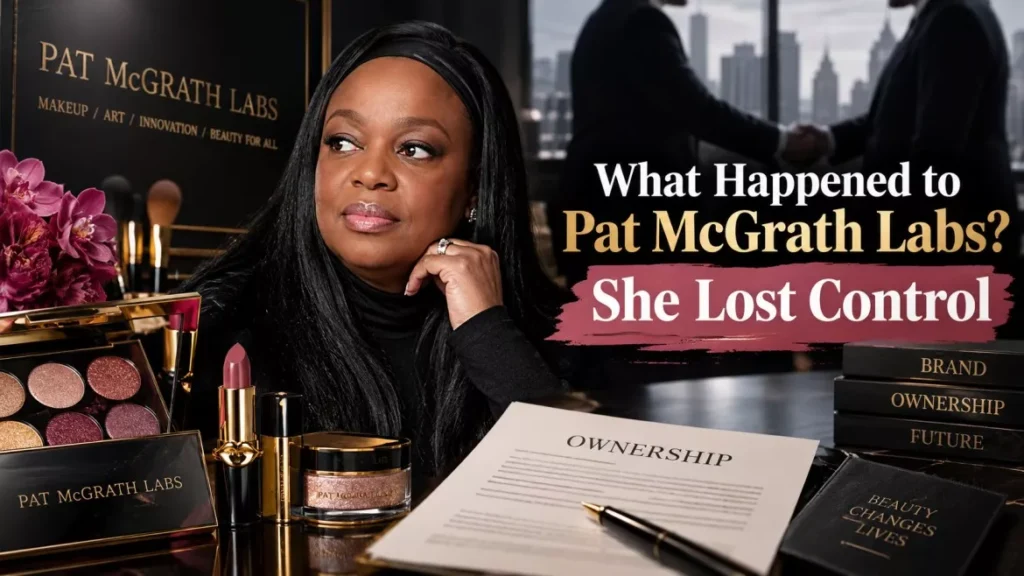

Pat McGrath Labs filed for Chapter 11 bankruptcy on 22 January 2026 and came out of it three months later under a new owner. Investment firm GDA Luma took control in April 2026 after putting in more than $65 million. Pat McGrath stepped down as chief executive and stayed on as chief creative officer.
Is Pat McGrath Labs Still Selling Makeup?
Yes. The brand never stopped trading, and it has been out of bankruptcy protection since April 2026.
Chapter 11 in the United States is a reorganisation process rather than a liquidation, so the company kept operating throughout. Products remained on sale through the brand’s own site and through retailers including Sephora and Ulta Beauty while the case ran.
A judge in the US Bankruptcy Court for the Southern District of Florida approved the exit plan on Friday 17 April 2026, and the company announced it was out of Chapter 11 on Monday 20 April 2026. As of 15 September 2026, that remains the most recent major development; no further restructuring or sale has been announced since.
The Loan Dispute That Forced the Filing
The bankruptcy was triggered by a fight over how much the company actually owed, and by a lender auction that the filing stopped.
Pat McGrath Labs had taken a short-term bridge loan from GDA PMG Funding LLC to steady the business while it looked for a longer-term solution. By June 2025 it had not repaid or refinanced on the agreed timetable.
The two sides then disagreed sharply about the size of the debt. In its court filing the company said it had received $17.5 million in loan advances. GDA asserted that more than $43 million was outstanding, of which it claimed $30.5 million was principal. The company listed estimated liabilities of roughly $50 million to $100 million.
Earlier in January 2026, GDA had started an auction of the brand’s assets without McGrath’s agreement. The Chapter 11 filing on 22 January terminated that auction. “This Chapter 11 will enable me to remain in the driver’s seat and keep the Company’s vision focused,” McGrath said in the filing.
What the Restructuring Cost Pat McGrath
She gave up control of the company she founded, in the same process she had described as a way to keep it.
GDA Luma, the Miami-based firm connected to the lender, financed the case and then took the business. It provided $10 million in debtor-in-possession funding in February 2026 and committed at least $20 million in post-emergence working capital, with total backing reported at more than $65 million by the time the plan was approved. GDA Luma took a 65 per cent common equity stake plus new preferred equity, in exchange for forgiving debt it was owed, and set up a new holding company to hold the brand.
McGrath moved from chief executive to chief creative officer. What she kept is less clear: GDA Luma had earlier indicated she would remain a significant shareholder, while court documents filed on 15 April 2026 amended the terms to remove certain consideration to her. Reports at the exit differed on whether she retained a minority stake, and the company has not published a definitive figure.
“Creating beauty that moves people has been my life’s work and that never stops,” McGrath said when the exit was announced. Gabriel de Alba, founder and managing partner of GDA Luma, said the priority had been “to stabilize the foundation of the business” and to invest behind the next phase of growth.
How a $1 Billion Brand Ran Out of Money
The valuation peaked in 2018 and then fell for years as sales weakened and investors marked the business down.
Pat McGrath founded the brand in 2015, after two decades as one of the most sought-after makeup artists in fashion, working backstage for houses including Prada, Versace and Alexander McQueen. A $60 million investment from Eurazeo in 2018, for a stake of about 5 to 6 per cent, valued the company at roughly $1 billion. Eurazeo exited in 2021.
The decline after that was steep. Sienna Investment Managers bought a 14.4 per cent stake in 2021 at a valuation of about €1.2 billion, then wrote that investment down by 88 per cent. Slow sales, repeated changes in senior management and rounds of layoffs followed, and by December 2025 the company was preparing to put itself up for sale. Beauty was not alone in this: The Body Shop’s own bankruptcy in 2024 showed how quickly a well-known name can run short of cash.
Meanwhile, Pat McGrath Took Over Louis Vuitton’s Makeup Line
While her own company was heading into bankruptcy, McGrath was launching a rival luxury beauty range for LVMH.
Louis Vuitton named her creative director of its first makeup collection, La Beauté Louis Vuitton, which went on sale globally at the end of August 2025, roughly five months before the Chapter 11 filing. The range included 55 lipstick shades, ten balms and eight eyeshadow palettes, with casing designed by Konstantin Grcic.
The contrast matters for anyone asking what happened to Pat McGrath as a person rather than as a business. She was made a Dame in the 2021 New Year Honours, the first makeup artist to receive the title, and her personal standing in fashion did not depend on the fate of her company. The brand that carries her name changed hands; her career did not stop.
Frequently Asked Questions
Did Pat McGrath Labs Go Out of Business?
No. It reorganised under Chapter 11 rather than liquidating, and it was operating normally again by late April 2026.
Who Owns Pat McGrath Labs Now?
GDA Luma, a Miami-based investment firm, holds a 65 per cent common equity stake plus preferred equity through a new holding company created in the restructuring.
Is Pat McGrath Still the Chief Executive?
No. She left the chief executive role in the restructuring and now serves as chief creative officer.
Are Pat McGrath Labs Products Still Sold at Sephora?
Yes. The brand continued selling through its own site and major beauty retailers throughout the bankruptcy and after the April 2026 exit.
Why Did Pat McGrath Labs File for Bankruptcy in the First Place?
It had defaulted on a bridge loan, disputed how much it owed its lender, and faced an asset auction the lender had begun without the founder’s agreement.