
OpenAI is putting visual display ads next to the images ChatGPT generates. The format starts later in October 2026 with a limited group of advertisers in the United States only, and it lands on the plans that already carry ads. OpenAI announced it on 5 October 2026.
What the New ChatGPT Visual Ads Actually Are
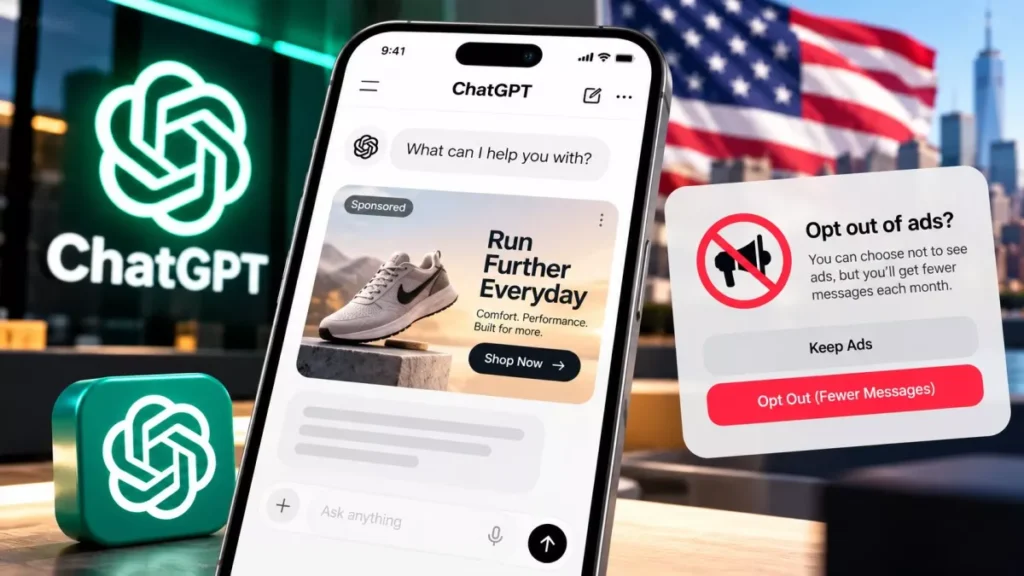
ChatGPT visual ads are picture-based ads placed beside an image you asked ChatGPT to make, not inside it. OpenAI, the San Francisco company behind ChatGPT, describes the format as using images that show product inspiration, how a product is used, or the experiences a product makes possible.
Two design commitments come with it. The company says the ads are clearly labelled and remain separate from the image being created, and that ads do not influence ChatGPT’s answers. Until now, ChatGPT advertising had been text-style placements rather than pictures, which is what makes this a format change rather than a wider rollout.
Who Sees Them, and Who Does Not
Only the ad-supported plans are affected, and the visual test is narrower still. Advertising in ChatGPT runs on the Free and Go plans and is shown to logged-in adults; paid tiers above Go do not carry it.
| Plan | Ads today | In the October visual test |
|---|---|---|
| Free | Yes | Yes, United States only |
| Go | Yes | Reported for low-cost plans; OpenAI has not itemised them |
| Plus | No | No |
| Pro | No | No |
| Business, Enterprise, Education | No | No |
TechCrunch reported on 5 October 2026 that the visual format applies to free and low-cost subscription plans. OpenAI’s own announcement did not name the tiers, so the Go position rests on that reporting and on the existing ads policy rather than on a statement about this test.
How to Stop Seeing Ads in ChatGPT
There are two ways out, and the free one costs you messages. Turning off ad personalisation changes which ads you see; it does not remove them.
- Open Settings in ChatGPT and choose Ads controls.
- Select the option to change plan to go ad-free.
- Choose to reduce message limits, which removes ads while keeping you on the Free plan in exchange for fewer daily messages.
- Or subscribe to Plus or Pro, where ads do not appear at all.
Neither route is specific to the new visual format. The same control governs every ad ChatGPT serves, which means the switch that exists today also covers the images arriving this month.
What OpenAI Says the Ads Do Not Touch
The company’s stated limits are about answers, conversations and sensitive subjects. OpenAI has said that responses are optimised on what is most helpful to the user, with no advertiser input, and that advertisers receive only aggregate figures such as views and clicks rather than chat history, memories or personal details.
- Answers: OpenAI says ads have no influence over what ChatGPT replies.
- Conversations: advertisers do not see them; ad topics are matched without being shared.
- Sensitive subjects: ChatGPT ads avoid categories including health, mental health and politics.
- Minors: ads are shown only to logged-in adults.
The Measurement Layer Launched Alongside It
The bigger half of the 5 October announcement was plumbing for advertisers, not pixels for users. OpenAI said its pixel and Conversions API measure actions such as purchases, leads, installs and sign-ups, with data integrations through Hightouch, Tealium and LiveRamp.
It also named attribution partners including AppsFlyer, Adjust, Branch, Singular, Kochava, Triple Whale and Northbeam, and incrementality partners including Haus, Measured, WorkMagic, Kantar and Cint. Separately, DoubleVerify and Integral Ad Science are running brand suitability pilots, which OpenAI says operate in controlled environments without access to private conversations.
Where ChatGPT Ads Stand as of 6 October 2026
Ads are live on ChatGPT’s Free and Go plans, and the visual format is not live yet. Advertising began in ChatGPT in the United States on 9 February 2026 and has since extended to European markets, where it launched without ad personalisation. The visual image-generation format is still to come, with OpenAI saying only that it starts later in October 2026 and in the United States.
ChatGPT reaches 1.2 billion people each week, a figure OpenAI gave in the same announcement, so a US-only test with a handful of advertisers is a small slice of the audience for now. Our report on OpenAI Dots pricing covered a similar pattern, where a launch lands in one market first and other regions wait.
What Is Still Unconfirmed
Four details are missing. OpenAI has not published the exact start date inside October, has not named the advertisers in the test group, has not said when or whether the visual format reaches countries outside the United States, and has not said whether it will appear anywhere other than image generation. The company has also not published a size, placement or frequency specification that would tell users how prominent the ads will be.
Frequently Asked Questions
When Do ChatGPT Visual Ads Start?
Later in October 2026, in the United States. OpenAI announced the format on 5 October 2026 but has not given a specific start date.
Will I See Visual Ads if I Pay for ChatGPT?
No. Advertising in ChatGPT runs on the Free and Go plans. Plus, Pro, Business, Enterprise and Education accounts do not show ads.
Can I Turn Off ChatGPT Ads Without Paying?
Yes, at a cost. In Settings under Ads controls you can go ad-free on the Free plan by accepting reduced daily message limits. Turning off ad personalisation alone changes which ads appear but does not remove them.
Do the Ads Appear Inside the Generated Image?
No. OpenAI says the ads are clearly labelled and remain separate from the image being created.
Do Advertisers See My ChatGPT Conversations?
OpenAI says they do not. Advertisers receive aggregate metrics such as views and clicks, and do not get chat history, memories or personal details.